Introduction
As urban populations continue to grow at an unprecedented rate, cities around the world are under increasing pressure to become more efficient, sustainable, and livable. The concept of “smart cities” has emerged as a solution—leveraging advanced technologies to optimize infrastructure, improve public services, and enhance quality of life. At the heart of this transformation lies a critical yet often overlooked component: environmental sensors.
Environmental sensors serve as the “eyes and ears” of smart cities, continuously collecting real-time data about the surrounding environment. From air quality and noise levels to weather conditions and water quality, these sensors provide essential insights that enable city managers, policymakers, and businesses to make informed decisions.
This article explores why environmental sensors are indispensable to smart cities, how they function across different applications, and how companies like Coda Sensor are contributing to the future of intelligent urban ecosystems.
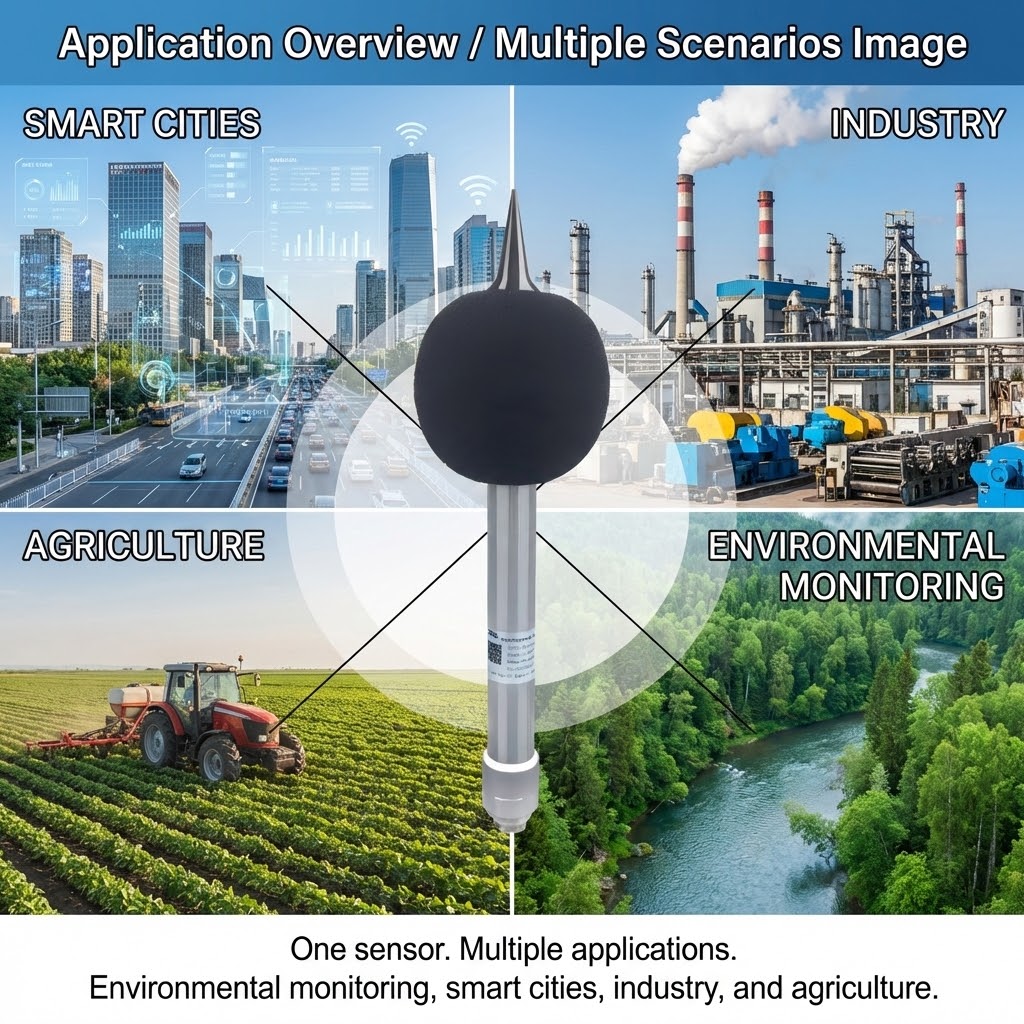
Environmental sensors are devices designed to measure physical, chemical, and biological parameters in the environment. These include:
Temperature and humidity sensors
Air quality sensors (PM2.5, PM10, CO₂, NO₂, SO₂)
Noise level sensors
Wind speed and direction sensors
Rainfall and solar radiation sensors
Water quality sensors (pH, turbidity, dissolved oxygen)
These sensors are typically integrated into Internet of Things (IoT) networks, allowing them to transmit data in real time to centralized platforms for analysis and visualization.
Air pollution is one of the most pressing challenges facing modern cities. Environmental sensors enable continuous monitoring of pollutants such as particulate matter and harmful gases. This data helps:
Alert residents during hazardous conditions
Support policy decisions on traffic control and industrial emissions
Enable long-term environmental planning
With accurate data, cities can implement targeted measures to improve air quality and protect public health.
Weather plays a crucial role in urban planning and daily operations. Smart cities rely on weather stations equipped with environmental sensors to track:
Temperature fluctuations
Wind patterns
Rainfall intensity
Solar radiation
This information is essential for disaster prevention, especially in regions prone to floods, storms, or extreme heat. For example, real-time rainfall data can trigger early warning systems and prevent urban flooding.
Coda Sensor provides advanced weather monitoring solutions that integrate multiple parameters into a single system, enabling precise and reliable data collection.
Urban noise is more than just an annoyance—it has serious health implications, including stress, sleep disturbance, and cardiovascular issues. Noise sensors deployed across cities help:
Identify high-noise zones
Enforce regulations in residential and commercial areas
Optimize traffic flow to reduce congestion-related noise
By mapping noise pollution in real time, cities can take proactive measures to create quieter, healthier environments.
Clean water is fundamental to public health. Environmental sensors are used to monitor water quality in rivers, lakes, reservoirs, and wastewater systems. Key parameters include:
pH levels
Turbidity
Dissolved oxygen
Chemical contaminants
Smart water monitoring systems can detect anomalies instantly, enabling rapid response to contamination events. This is particularly important for wastewater treatment and drinking water safety.
Coda Sensor offers comprehensive water monitoring solutions that support real-time data transmission and remote management, ensuring efficient water resource management.
Environmental sensors are increasingly being used in waste management systems. For example:
Fill-level sensors in garbage bins optimize collection routes
Gas sensors detect hazardous emissions from waste sites
Temperature sensors prevent fire hazards in landfills
These applications reduce operational costs while improving environmental safety and efficiency.
Cities often experience higher temperatures than surrounding rural areas due to dense infrastructure—a phenomenon known as the urban heat island effect. Environmental sensors help monitor:
Surface temperatures
Ambient heat levels
Solar radiation
This data allows urban planners to implement cooling strategies such as green roofs, reflective materials, and increased vegetation.
One of the most significant advantages of environmental sensors is their ability to provide continuous, high-resolution data. This enables:
Evidence-based policymaking
Long-term environmental trend analysis
Optimization of city infrastructure
For example, traffic and air quality data can be combined to redesign road networks or implement low-emission zones.
Environmental sensors are most powerful when integrated into IoT ecosystems. Data collected by sensors is transmitted via communication protocols such as LoRa, NB-IoT, or RS485 to cloud-based platforms. These platforms offer:
Real-time dashboards
Data analytics and visualization
Automated alerts and reporting
Coda Sensor’s cloud platform enables users to monitor multiple environmental parameters 24/7, providing actionable insights for smart city management.
By monitoring air and water quality, cities can reduce exposure to harmful pollutants and improve overall health outcomes.
Environmental sensors support sustainable practices by optimizing resource usage and reducing waste.
Automation and real-time data reduce the need for manual inspections and improve response times.
Efficient resource management and predictive maintenance lead to significant cost reductions.
Cleaner air, safer water, and quieter environments contribute to a higher standard of living.
Despite their advantages, implementing environmental sensors in smart cities comes with challenges:
Initial investment costs
Data security and privacy concerns
Maintenance and calibration requirements
Integration with existing infrastructure
However, advancements in sensor technology and decreasing costs are making these systems more accessible than ever.
The future of smart cities is deeply intertwined with advancements in environmental sensing. Emerging trends include:
AI-powered data analytics for predictive insights
Edge computing for faster data processing
Integration with autonomous systems
Expansion of 5G networks for real-time connectivity
As these technologies evolve, environmental sensors will become even more critical in shaping sustainable and resilient urban environments.
Coda Sensor is a leading provider of environmental monitoring solutions, offering a wide range of high-precision sensors for smart city applications. Their product portfolio includes:
Weather stations for comprehensive climate monitoring
Air quality sensors for pollution detection
Water quality sensors for environmental protection
With robust hardware, reliable communication protocols, and advanced cloud integration, Coda Sensor empowers cities to make smarter decisions based on accurate, real-time data.
Environmental sensors are not just components of smart cities—they are the foundation upon which intelligent urban systems are built. By providing real-time, actionable data, these sensors enable cities to address critical challenges such as pollution, climate change, and resource management.
As urbanization continues to accelerate, the importance of environmental sensors will only grow. Cities that invest in these technologies today are better positioned to create sustainable, efficient, and livable environments for future generations.
In the journey toward smarter cities, environmental sensors are the key to unlocking a more connected and sustainable world.
What are the uses of a rain gauge? Learn how rai
Learn how PAR sensors measure PPFD, optimize gro
Learn how soil EC sensors help optimize fertiliz
Contact: Molly
Phone: +86-17775769236
Tel: 86-0731-85117089
Email: molly@codasensor.com
Add: Building S5, Aux Square, Yuelu District, Changsha City, Hunan Province, China
We chat






 English


