Air pollution has become one of the most serious environmental and public health challenges in the modern world. With rapid industrial growth, urban expansion, and increasing vehicle emissions, the concentration of airborne particulate matter continues to rise in many regions. These tiny particles are often invisible to the naked eye, but they can have significant impacts on human health and the environment.
To address this issue, air quality sensors have become essential tools in environmental monitoring systems. These sensors provide real-time data on particulate matter levels, especially PM1.0, PM2.5, and PM10, helping governments, industries, and individuals understand air pollution conditions and take appropriate action.
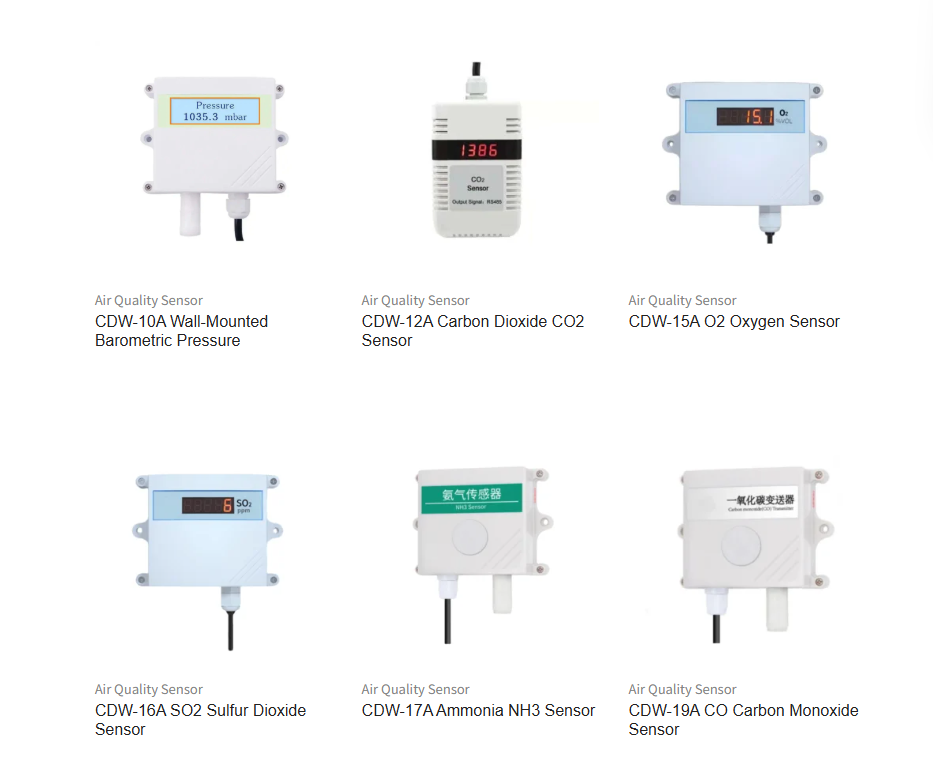
Air quality sensors are electronic devices designed to measure the concentration of pollutants in the air. These pollutants may include gases such as carbon dioxide, nitrogen dioxide, and sulfur dioxide, but one of the most important measurements is particulate matter (PM).
Particulate matter refers to tiny solid or liquid particles suspended in the air. Air quality sensors detect and measure these particles in real time and convert them into digital or analog signals that can be analyzed and displayed.
Modern air quality sensors are widely used in environmental monitoring stations, smart cities, industrial sites, and indoor air quality systems. They are often integrated into larger monitoring networks that provide continuous environmental data.
Particulate matter is classified based on particle size, and each category has different health and environmental impacts.
PM1.0 refers to particles with a diameter of less than 1 micrometer. These particles are extremely small and can penetrate deep into the human respiratory system, reaching the lungs and even entering the bloodstream. Because of their size, they are considered highly dangerous. Common sources include combustion processes, vehicle exhaust, and industrial emissions.
PM2.5 refers to particles smaller than 2.5 micrometers. These are among the most widely monitored air pollutants due to their strong connection with serious health problems. PM2.5 is commonly produced by burning fossil fuels, industrial activities, power plants, and biomass burning. Exposure to PM2.5 is associated with respiratory diseases, cardiovascular issues, and long-term health risks.
PM10 refers to particles smaller than 10 micrometers. These particles are larger than PM2.5 but still small enough to be inhaled into the respiratory system. They often originate from dust, construction activities, road dust, pollen, and agricultural operations. While they typically affect the upper respiratory tract, prolonged exposure can still cause health issues.
Understanding these three categories is essential for evaluating air quality and assessing pollution risks in different environments.
Most modern air quality sensors operate using optical sensing technology, specifically the light scattering principle. This method is widely used because it provides accurate, fast, and real-time measurements of particulate matter.
The process begins when ambient air is drawn into the sensor chamber using a small fan or airflow system. Once inside, the air passes through a measurement zone where a laser or infrared light source emits a focused beam.
As airborne particles pass through the light beam, they scatter the light in different directions. The amount and pattern of scattered light depend on the size and concentration of the particles.
A photodetector inside the sensor captures this scattered light and converts it into an electrical signal. This signal is then processed by an internal microcontroller, which calculates the concentration of PM1.0, PM2.5, and PM10.
Finally, the sensor outputs the data in real time through communication interfaces such as RS485, Modbus, analog signals like 4–20 mA, or wireless IoT platforms. This allows the data to be integrated into monitoring systems, cloud platforms, or display devices.
Real-time air quality monitoring plays a crucial role in environmental protection and public health management. One of its biggest advantages is the ability to detect pollution changes instantly. This allows quick response actions when air quality reaches dangerous levels.
For example, in urban areas, real-time monitoring can trigger alerts when pollution levels spike due to traffic congestion or industrial emissions. In industrial environments, it helps ensure that emissions remain within regulatory limits and prevents environmental violations.
Real-time data also supports long-term analysis. By continuously collecting information, organizations can identify pollution trends, seasonal variations, and major pollution sources. This data is essential for developing effective environmental policies and improving air quality strategies.
In addition, real-time monitoring helps protect human health. Individuals can adjust outdoor activities based on current air quality conditions, reducing exposure to harmful particles.
Air quality sensors are used in a wide range of applications across different industries.
In smart cities, these sensors are installed across urban areas to monitor pollution levels and provide data for city planning and environmental management. This helps governments improve air quality policies and reduce pollution hotspots.
In industrial environments, air quality sensors are used to monitor emissions from factories and production facilities. They help ensure compliance with environmental regulations and improve workplace safety.
Construction sites also rely on air quality sensors to monitor dust levels generated during excavation, demolition, and building activities. This helps protect workers and nearby residents from excessive dust exposure.
Indoor air quality monitoring is another important application. Offices, schools, hospitals, and residential buildings use these sensors to ensure a healthy indoor environment by tracking PM levels and maintaining ventilation systems.
Air quality sensors are also used in transportation systems, including tunnels and highways. These environments often experience high pollution levels due to vehicle emissions, making continuous monitoring essential for safety and ventilation control.
Modern air quality sensors offer several advanced features that make them highly effective for environmental monitoring.
They provide high accuracy in measuring PM1.0, PM2.5, and PM10 concentrations. They also support real-time data transmission, allowing immediate access to air quality information.
Many sensors are designed with compact and durable structures, making them suitable for both indoor and outdoor environments. They support multiple output methods, including digital communication protocols and analog signals, which makes them easy to integrate into different systems.
With the development of IoT technology, many air quality sensors now support cloud-based monitoring platforms. This enables remote access, data visualization, and intelligent analysis.
Although air quality sensors are highly advanced, their accuracy can be influenced by environmental conditions.
Humidity is one of the most important factors. High humidity levels can cause particles to absorb moisture, which may lead to overestimation of particle concentration.
Temperature variations can also affect sensor performance, especially in extreme environments.
The composition of particles in the air may influence how light is scattered, which can slightly affect measurement accuracy.
To ensure reliable results, regular calibration and maintenance are necessary. This helps maintain long-term stability and accuracy of the sensor.
The future of air quality monitoring is closely linked to technological advancement. One major trend is the integration of IoT systems, allowing sensors to be connected to cloud platforms for real-time remote monitoring.
Artificial intelligence is also playing an increasing role. AI algorithms can analyze large volumes of air quality data, identify patterns, and predict pollution events.
Miniaturization is another important trend. Sensors are becoming smaller, more energy-efficient, and easier to deploy in large numbers across different environments.
In the future, air quality sensors will also become more integrated, combining particulate matter detection with gas sensing, weather monitoring, and other environmental parameters in a single device.
Air quality sensors are essential tools for understanding and managing air pollution in today’s world. By measuring PM1.0, PM2.5, and PM10 in real time, they provide valuable insights into environmental conditions and help protect human health.
Through advanced optical sensing technology and IoT integration, these sensors enable continuous monitoring and intelligent environmental management. Their applications span smart cities, industrial sites, construction areas, and indoor environments.
As air pollution challenges continue to grow, air quality sensors will play an increasingly important role in building cleaner, safer, and more sustainable environments for the future.
What are the uses of a rain gauge? Learn how rai
Learn how PAR sensors measure PPFD, optimize gro
Learn how soil EC sensors help optimize fertiliz
Contact: Molly
Phone: +86-17775769236
Tel: 86-0731-85117089
Email: molly@codasensor.com
Add: Building S5, Aux Square, Yuelu District, Changsha City, Hunan Province, China
We chat






 English


