Electrical Conductivity (EC) measurement is one of the most widely used methods for evaluating water quality. It provides a fast and reliable indication of the concentration of dissolved ions such as salts, minerals, and chemicals in water. As industries increasingly rely on precise environmental monitoring, EC sensors have become essential tools in applications ranging from irrigation to ocean research.
However, selecting the correct type of EC sensor is not always straightforward. A common mistake is assuming that a single EC sensor can perform equally well in all water conditions. In reality, water EC sensors and seawater EC sensors are designed for very different environments. Choosing the wrong sensor can lead to inaccurate readings, reduced lifespan, and even equipment failure.
This article provides a comprehensive comparison of these two sensor types, helping you understand their differences, advantages, and best-use scenarios.
Electrical conductivity refers to a liquid’s ability to conduct electric current. This ability depends on the presence of charged ions in the water. The higher the ion concentration, the higher the conductivity.
Freshwater typically has low conductivity because it contains fewer dissolved salts, while seawater has extremely high conductivity due to its rich salt content. This fundamental difference is the reason why specialized sensors are required for different environments.
EC is usually measured in microsiemens per centimeter (µS/cm) or millisiemens per centimeter (mS/cm). Accurate measurement requires not only proper sensor design but also temperature compensation, as conductivity changes with temperature.
A water EC sensor is designed to measure conductivity in freshwater or low-salinity environments. These sensors are optimized for detecting small changes in ion concentration, making them ideal for applications where precision is critical.
Water EC sensors typically operate within a low to medium conductivity range, often from 0 to 20 mS/cm. Their high sensitivity allows them to detect even minor variations in water quality, which is particularly important in controlled environments like agriculture and industrial processes.
They are usually constructed using corrosion-resistant materials such as stainless steel or plastic, which are sufficient for freshwater conditions. In addition, these sensors are often compact and easy to install, making them suitable for pipelines, tanks, and portable monitoring devices.
Water EC sensors are widely used in:
Agriculture and Irrigation: Monitoring nutrient levels in soil and water to optimize crop growth
Hydroponics: Maintaining precise nutrient solutions for plant cultivation
Drinking Water Systems: Ensuring water meets safety and quality standards
Wastewater Treatment: Controlling chemical dosing and treatment processes
Industrial Water Systems: Monitoring cooling towers and boiler water
In these applications, accuracy and sensitivity are more important than extreme durability.
A seawater EC sensor is specifically engineered for high-salinity and harsh marine environments. Unlike freshwater systems, seawater contains a high concentration of dissolved salts, resulting in conductivity levels that can exceed 50 mS/cm.
Seawater EC sensors are designed with a much wider measurement range, typically up to 70 mS/cm or higher. They are built using advanced materials such as titanium, graphite, or special anti-corrosion coatings to withstand prolonged exposure to saltwater.
Another important feature is enhanced temperature compensation. Since seawater conductivity is closely related to salinity, accurate measurement often requires precise temperature correction.
These sensors are also designed to resist biofouling, a common issue in marine environments where organisms such as algae and barnacles accumulate on sensor surfaces.
Seawater EC sensors are essential in:
Oceanographic Research: Monitoring salinity and supporting climate studies
Aquaculture: Maintaining optimal conditions for fish, shrimp, and other marine life
Desalination Plants: Measuring salt concentration during water treatment
Coastal Monitoring Systems: Tracking environmental changes and pollution levels
Offshore Engineering: Supporting oil platforms and marine infrastructure
In these environments, durability and stability are critical.
The most obvious difference is the conductivity range. Water EC sensors are designed for low to moderate conductivity, while seawater EC sensors handle very high conductivity levels. Using a freshwater sensor in seawater can result in saturation or inaccurate readings.
Water EC sensors use standard corrosion-resistant materials, whereas seawater EC sensors require high-grade materials like titanium to prevent corrosion. This makes seawater sensors more robust but also more expensive.
Water EC sensors excel in detecting small changes in low-conductivity environments. In contrast, seawater EC sensors are optimized for stability and consistency in high-conductivity conditions rather than ultra-high sensitivity.
Temperature affects all EC measurements, but its impact is more significant in seawater applications. Seawater EC sensors often include advanced compensation algorithms to ensure accurate salinity calculations.
Seawater sensors generally require more maintenance due to fouling and scaling. Regular cleaning and anti-fouling measures are essential to maintain performance.
In agriculture, water EC sensors help farmers monitor nutrient concentrations in irrigation systems. By maintaining the correct EC level, crops can achieve optimal growth and yield.
In industrial systems, these sensors ensure that water used in cooling or processing meets required standards, preventing equipment damage and improving efficiency.
In aquaculture, maintaining the correct salinity is crucial for the health of aquatic species. Seawater EC sensors provide real-time data that allows operators to adjust conditions quickly.
In desalination plants, these sensors monitor salt levels throughout the treatment process, ensuring efficient operation and high-quality output water.
Selecting the appropriate EC sensor involves several considerations:
Conductivity Range: Ensure the sensor can handle the expected conductivity levels
Environmental Conditions: Consider factors such as corrosion, pressure, and temperature
Installation Method: Choose a sensor suitable for pipelines, tanks, or open water
Output Signal: Ensure compatibility with your monitoring system (e.g., 4–20 mA, RS485)
Maintenance Needs: Evaluate how often the sensor will require cleaning or calibration
Making the right choice not only improves accuracy but also reduces long-term operational costs.
Proper installation is critical for accurate EC measurement. Sensors should be placed in areas with stable water flow to avoid fluctuations caused by turbulence or air bubbles.
Regular maintenance is equally important. This includes cleaning the sensor surface to remove deposits, calibrating the sensor with standard solutions, and inspecting for signs of wear or corrosion.
For seawater applications, using anti-fouling coatings or protective housings can significantly extend the sensor’s lifespan.
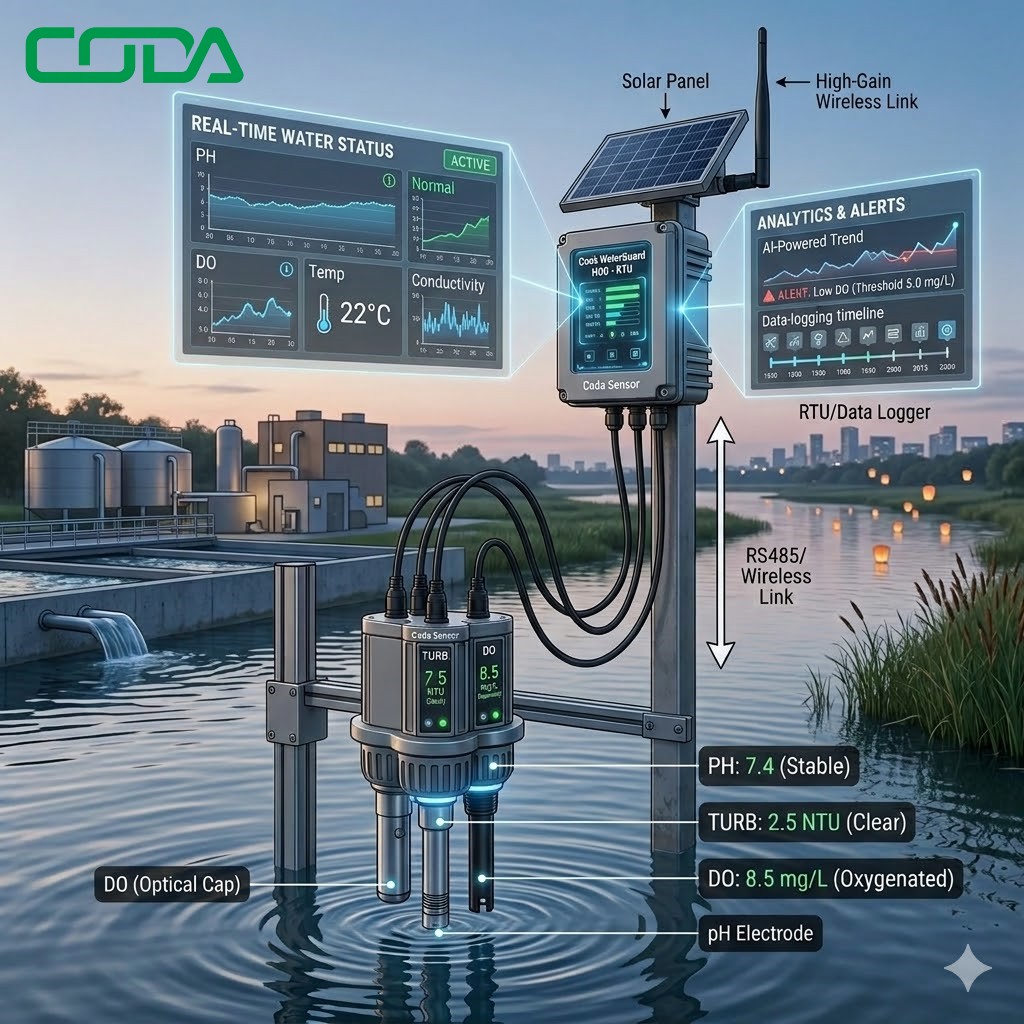
As industries move toward automation and smart monitoring, EC sensor technology continues to evolve. Modern sensors are increasingly integrated with IoT platforms, enabling real-time data transmission and remote monitoring.
Advancements in materials and coatings are improving durability, especially in harsh marine environments. Additionally, multi-parameter sensors that combine EC with temperature, pH, and dissolved oxygen measurement are becoming more popular.
These innovations are helping industries achieve greater efficiency, sustainability, and data accuracy.
Water EC sensors and seawater EC sensors serve the same fundamental purpose but are designed for very different conditions. Water EC sensors offer high sensitivity and precision for freshwater applications, while seawater EC sensors provide the durability and range needed for marine environments.
Understanding these differences is essential for selecting the right sensor and ensuring reliable performance. Whether you are managing an irrigation system, operating a desalination plant, or conducting ocean research, choosing the correct EC sensor will directly impact the success of your monitoring system.
What are the uses of a rain gauge? Learn how rai
Learn how PAR sensors measure PPFD, optimize gro
Learn how soil EC sensors help optimize fertiliz
Contact: Molly
Phone: +86-17775769236
Tel: 86-0731-85117089
Email: molly@codasensor.com
Add: Building S5, Aux Square, Yuelu District, Changsha City, Hunan Province, China
We chat






 English


