Rainfall is one of the most important parameters in weather observation and environmental monitoring. Accurate precipitation data is essential for meteorology, agriculture, hydrology, flood prediction, and climate research. Without reliable rainfall measurements, it would be difficult to understand weather patterns, manage water resources, or respond to natural disasters.
Among the many instruments used to measure precipitation, the tipping bucket rain gauge is one of the most widely used devices in modern weather monitoring systems. Known for its simple mechanical design, high reliability, and easy integration with digital monitoring platforms, this type of rainfall measurement sensor has become the standard solution for automated weather stations worldwide.
In this article, we will explore how tipping bucket rain gauges work, including their internal structure, measurement mechanism, data transmission methods, and their advantages compared with traditional manual rain gauges. We will also examine their typical applications in meteorology, hydrology, and smart environmental monitoring systems.
A tipping bucket rain gauge is designed to collect rainfall and convert it into measurable signals that can be recorded electronically. Although the design may vary slightly depending on the manufacturer, most tipping bucket rain gauges share several essential components.
The rain collector is the upper part of the rain gauge and usually consists of a funnel-shaped opening. Its main purpose is to collect precipitation and direct it into the measurement mechanism inside the sensor.
The size and shape of the collector are carefully designed to ensure that rainfall is captured accurately without significant loss due to wind or splashing.
Many rain gauges include a filter screen at the top of the funnel to prevent debris such as leaves, insects, or dust from entering the system. This helps maintain measurement accuracy and prevents blockages.
The tipping bucket mechanism is the core measurement component of the rain gauge. It consists of two small buckets balanced on a pivot. When one bucket fills with a predetermined amount of water, it tips over due to the weight of the collected rain.
This tipping action empties the bucket and positions the other bucket to begin collecting rain.
Each time the bucket tips, a magnetic switch or reed switch is triggered. This switch generates an electrical signal that can be counted by a data logger or monitoring system.
The entire mechanism is enclosed in a protective housing, often made from stainless steel or durable weather-resistant materials. This protects the sensor from harsh environmental conditions such as wind, dust, rain, and UV exposure.
The tipping bucket rain gauge measures rainfall through a simple but highly effective mechanical process.
When precipitation falls, the rainwater enters the funnel-shaped collector at the top of the sensor. The funnel directs the water into the tipping bucket assembly below.
The bucket gradually fills with rainwater. Each bucket is calibrated to hold a specific volume of water, which corresponds to a known rainfall amount.
For example, a common rain gauge resolution is 0.2 mm per tip, meaning that every time the bucket tips, it represents 0.2 millimeters of rainfall.
Once the bucket reaches its calibrated capacity, the weight of the water causes it to tip. The filled bucket empties its water while the second bucket moves into position to collect the next rainfall.
During the tipping action, a magnet attached to the bucket passes near a reed switch, generating a short electrical pulse.
Each pulse represents a fixed amount of rainfall.
The pulses generated by the tipping mechanism are counted by a data logger or weather station controller. By counting the number of tips, the system calculates the total precipitation.
For example:
1 tip = 0.2 mm rainfall
10 tips = 2 mm rainfall
100 tips = 20 mm rainfall
This simple counting process allows weather monitoring systems to track precipitation accurately over time.
Modern tipping bucket rain gauges are designed to integrate with automated monitoring systems. To support this integration, they typically provide digital output signals that can be transmitted to data acquisition devices.
Pulse output is the most common signal type used by rain gauges.
Each time the bucket tips, the sensor produces a pulse signal that represents a fixed rainfall amount. A data logger counts these pulses to calculate total precipitation.
Pulse output is widely used because it is:
Simple and reliable
Compatible with most data loggers
Easy to integrate into weather monitoring systems
Some advanced rain gauges also support RS485 communication, which allows digital data transmission using the Modbus protocol.
RS485 offers several advantages:
Long-distance communication
Strong resistance to electromagnetic interference
Multiple sensor connections on one network
This makes RS485 particularly suitable for large environmental monitoring systems and smart IoT weather stations.
Before automated rain gauges became common, rainfall measurements were typically collected using manual rain gauges. These devices required human observers to measure rainfall using a graduated cylinder.
While manual gauges are simple, they have several limitations compared with automated tipping bucket rain gauges.
Automated rain gauges provide continuous, real-time rainfall monitoring, eliminating the need for manual observations.
Modern sensors can transmit rainfall data directly to monitoring platforms, allowing users to access information remotely.
Automated systems reduce labor costs and enable large-scale monitoring networks.
Real-time rainfall data allows meteorologists and environmental scientists to analyze weather conditions immediately and respond to extreme weather events.
Rainfall sensors can be integrated with IoT-based environmental monitoring systems, enabling data collection, analysis, and visualization through cloud platforms.
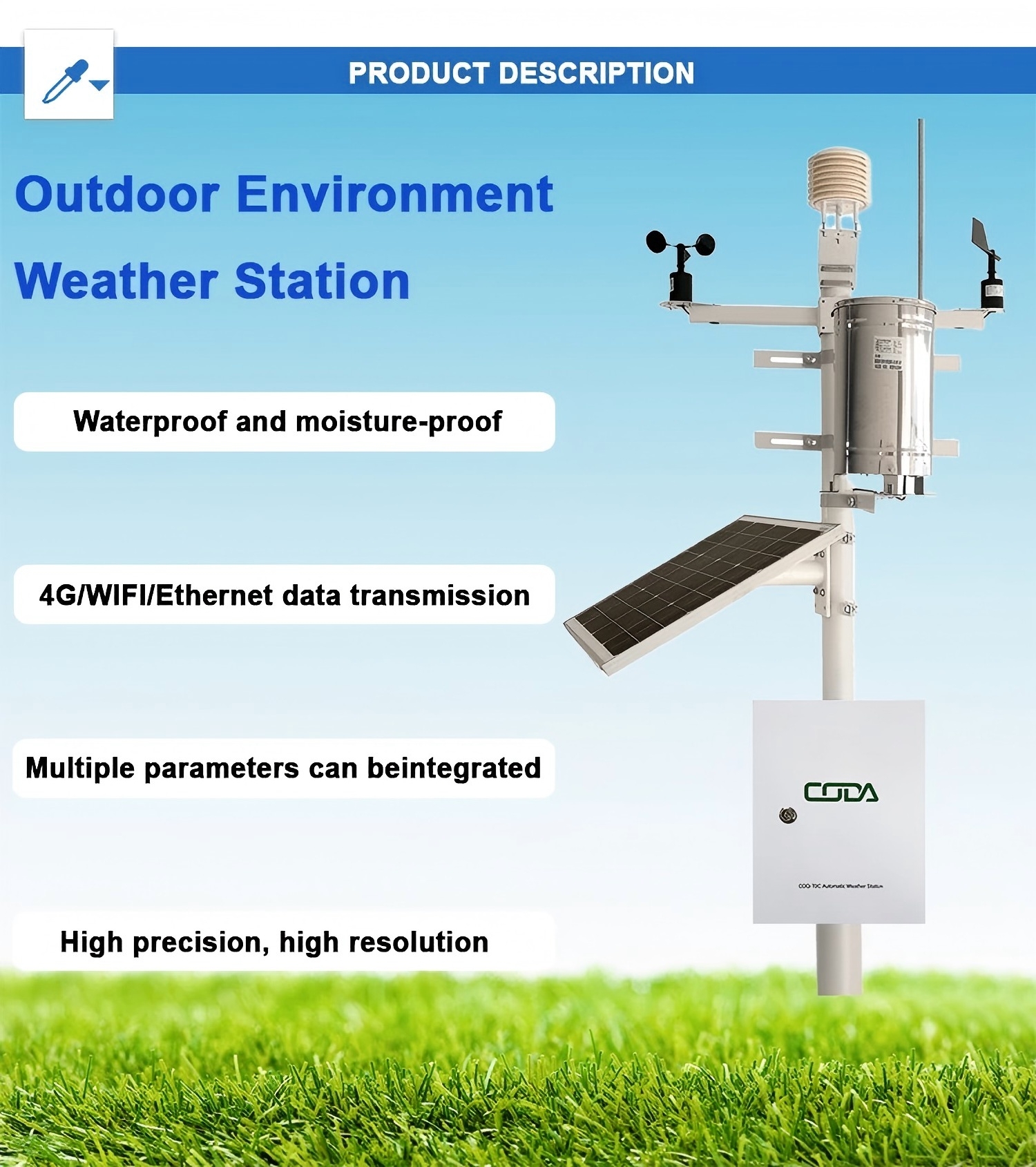
Because of their accuracy and reliability, tipping bucket rain gauges are widely used in many industries and scientific fields.
Weather stations rely on rain gauges to measure precipitation as part of a comprehensive environmental monitoring system. Other sensors in these stations may include temperature, humidity, wind speed, and solar radiation sensors.
Rainfall data helps meteorologists analyze weather patterns and produce accurate forecasts.
Hydrologists use rainfall sensors to monitor precipitation within watersheds and river basins.
This information helps authorities:
Predict flooding
Manage reservoirs
Analyze water cycles
In agriculture, rainfall monitoring is essential for irrigation planning. Farmers can use rainfall data to determine when crops need additional water.
By integrating rainfall sensors with smart irrigation systems, farms can optimize water usage and improve crop productivity.
Rainfall sensors are often installed in flood-prone areas to monitor precipitation levels in real time. When rainfall exceeds certain thresholds, warning systems can alert authorities and communities.
Researchers use rainfall data to study climate patterns, environmental changes, and long-term precipitation trends.
Reliable rainfall measurement sensors are essential for building accurate climate models.
The tipping bucket rain gauge remains one of the most reliable and widely used instruments for measuring precipitation in modern weather monitoring systems. Its simple mechanical design, accurate measurement capabilities, and compatibility with automated data collection systems make it an ideal solution for meteorology, hydrology, agriculture, and environmental monitoring.
By collecting rainfall through a funnel, measuring precipitation through a calibrated tipping mechanism, and converting these measurements into electrical signals, tipping bucket rain gauges provide continuous and precise rainfall data.
As environmental monitoring systems continue to evolve toward IoT-based networks and smart weather stations, the tipping bucket rain gauge will continue to play a vital role in collecting precipitation data and supporting weather analysis, water management, and climate research worldwide.
What are the uses of a rain gauge? Learn how rai
Learn how PAR sensors measure PPFD, optimize gro
Learn how soil EC sensors help optimize fertiliz
Contact: Molly
Phone: +86-17775769236
Tel: 86-0731-85117089
Email: molly@codasensor.com
Add: Building S5, Aux Square, Yuelu District, Changsha City, Hunan Province, China
We chat






 English


