Soil moisture seems simple at first glance—either the soil is wet, or it’s dry. For generations, farmers have relied on visual inspection, touch, and experience to decide when and how much to irrigate. While this intuition is valuable, modern agriculture has revealed a deeper truth: soil moisture is far more complex than it appears.
Many farmers unknowingly make decisions based on incomplete or misleading information about their soil. The result? Over-irrigation, under-irrigation, reduced crop yields, wasted resources, and even long-term soil degradation.
In this article, we’ll explore what farmers often misunderstand about soil moisture, why these gaps matter, and how sensor technology is transforming irrigation management into a precise, data-driven practice.
One of the most common misconceptions is treating soil moisture as a binary condition. In reality, soil exists along a spectrum of moisture levels, each affecting plant growth differently.
Saturation: All pores filled with water; roots may suffocate due to lack of oxygen
Field Capacity: Ideal balance of water and air for plant growth
Wilting Point: Soil holds water too tightly for plants to absorb
Available Water Range: The sweet spot between field capacity and wilting point
Many farmers irrigate either too early or too late because they cannot accurately identify where their soil sits within this range.
Soil moisture sensors provide real-time volumetric water content (VWC) data, allowing farmers to:
Pinpoint exact moisture levels
Irrigate only when necessary
Maintain optimal growing conditions
A common practice is checking the topsoil to judge moisture levels. However, this approach can be misleading.
The top 5 cm of soil dries out much faster than deeper layers
Roots often extend 20–60 cm or more below the surface
Surface moisture does not reflect root-zone conditions
This leads to two major issues:
Overwatering when the surface looks dry but deeper soil is still wet
Underwatering when the surface looks moist after light rain but deeper layers remain dry
By placing sensors at multiple depths (e.g., 10 cm, 30 cm, 50 cm), farmers can:
Monitor the entire root zone
Understand water distribution through the soil profile
Make precise irrigation decisions
Not all soils behave the same. Sandy, loamy, and clay soils have vastly different water retention and drainage characteristics.
Sandy Soil: Drains quickly, holds less water
Clay Soil: Retains water longer but drains poorly
Loamy Soil: Balanced properties
Many farmers apply uniform irrigation strategies across different fields—or even within the same field—without accounting for soil variability.
Water waste in clay-heavy zones
Drought stress in sandy patches
Uneven crop growth
Advanced soil sensors measure:
Moisture content
Electrical conductivity (EC)
Temperature
These parameters allow farmers to:
Identify soil variability
Implement zone-based irrigation
Optimize water usage for each soil type
Farmers often focus on how much water to apply, but when to irrigate is equally—if not more—important.
Irrigating during peak heat, leading to high evaporation
Watering too frequently with small amounts (shallow root growth)
Delaying irrigation until visible plant stress appears
Reduced water-use efficiency
Weak root systems
Lower crop resilience
With continuous monitoring, sensors enable:
Data-driven irrigation timing
Automated irrigation triggers
Integration with weather forecasts
This ensures water is applied:
At the right time
In the right amount
With minimal waste
Many farmers assume that more water equals better growth. In reality, over-irrigation can be just as damaging as drought.
Root oxygen deprivation
Nutrient leaching (especially nitrogen)
Increased disease pressure
Soil structure degradation
Excess irrigation doesn’t just waste water—it increases fertilizer costs and reduces long-term soil health.
By setting moisture thresholds, farmers can:
Stop irrigation when optimal levels are reached
Avoid unnecessary watering cycles
Protect both crops and soil
Soil moisture changes constantly due to:
Evaporation
Plant uptake
Temperature fluctuations
A single daily measurement—or occasional manual check—is not enough to capture these dynamics.
Decisions based on outdated data can lead to:
Missed irrigation windows
Inefficient water use
Crop stress
Modern sensor systems provide:
Continuous data updates
Historical trends
Alerts and analytics
This allows farmers to shift from reactive to proactive management.
Many farmers rely on weather forecasts or evapotranspiration (ET) models to guide irrigation. While useful, these methods have limitations.
It doesn’t account for soil variability
It assumes uniform field conditions
It cannot measure actual root-zone moisture
The most effective approach is integrating:
Soil moisture sensors
Weather stations
Cloud-based platforms
This combination provides a complete picture:
What the weather is doing
How the soil is responding
What the plants actually need
Modern sensor systems go beyond raw data collection. They connect to cloud platforms that offer:
Real-time dashboards
Remote monitoring via mobile or PC
Data visualization and trend analysis
API integration with irrigation systems
Reduced labor
Faster decision-making
Improved operational efficiency
For large-scale farms, this can mean managing multiple fields from a single interface—anytime, anywhere.
Adopting soil moisture sensors is not just about technology—it’s about sustainability and profitability.
Reduced water bills
Lower fertilizer costs
Increased crop yields
Better ROI on irrigation systems
Water conservation
Reduced nutrient runoff
Improved soil health
Lower carbon footprint
In regions facing water scarcity, these benefits are not optional—they are essential.
Soil moisture sensors are widely used in:
Greenhouses
Open-field crops
Orchards and vineyards
Landscaping and turf management
Environmental monitoring
Smart irrigation systems
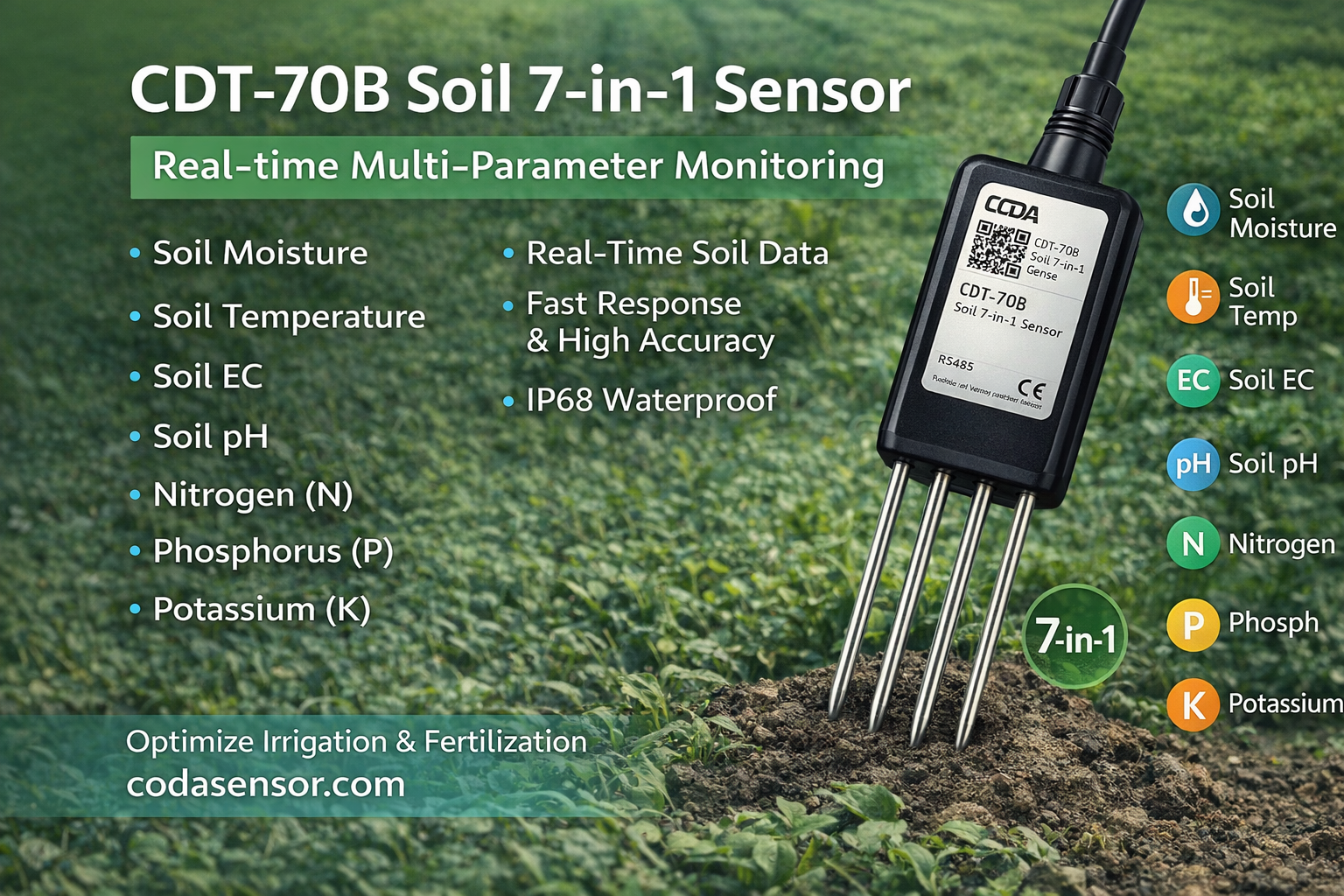
For example, a multi-parameter soil sensor (like a 7-in-1 model) can measure:
Soil moisture
Temperature
EC
pH
Nutrient levels (NPK)
This provides a comprehensive understanding of soil health—not just moisture.
Traditional farming knowledge remains invaluable, but it is no longer sufficient on its own. Soil moisture is a complex, dynamic variable that requires precise measurement and continuous monitoring.
What farmers often miss is not a lack of skill—but a lack of visibility.
Sensor technology bridges this gap by transforming invisible soil conditions into actionable data. With the right tools, farmers can move from guesswork to precision, from reactive decisions to proactive strategies.
In a world where every drop of water counts, understanding soil moisture is no longer optional—it’s a competitive advantage.
The future of agriculture lies beneath the surface—literally.
Those who invest in understanding their soil today will be the ones who thrive tomorrow.
What are the uses of a rain gauge? Learn how rai
Learn how PAR sensors measure PPFD, optimize gro
Learn how soil EC sensors help optimize fertiliz
Contact: Molly
Phone: +86-17775769236
Tel: 86-0731-85117089
Email: molly@codasensor.com
Add: Building S5, Aux Square, Yuelu District, Changsha City, Hunan Province, China
We chat






 English


