Even a small error in solar irradiance measurement can lead to significant revenue losses in utility-scale photovoltaic projects. For EPC contractors, solar farm developers, and asset owners, accurate environmental monitoring is no longer optional — it is essential for maximizing energy yield, ensuring contractual compliance, and protecting long-term return on investment.
Modern photovoltaic systems operate in constantly changing environmental conditions. Solar radiation, module temperature, humidity, rainfall, and wind speed all directly affect power generation efficiency. Without accurate monitoring data, operators cannot truly evaluate plant performance or identify hidden energy losses.
This is why professional solar weather stations have become a critical part of modern PV power plants.
A high-quality solar PV monitoring station provides real-time environmental data that supports:
Performance Ratio (PR) calculation
Energy yield optimization
Soiling analysis
Temperature compensation
SCADA integration
Predictive maintenance
Grid forecasting
For utility-scale solar farms, accurate weather monitoring can directly improve operational efficiency and reduce long-term maintenance costs.
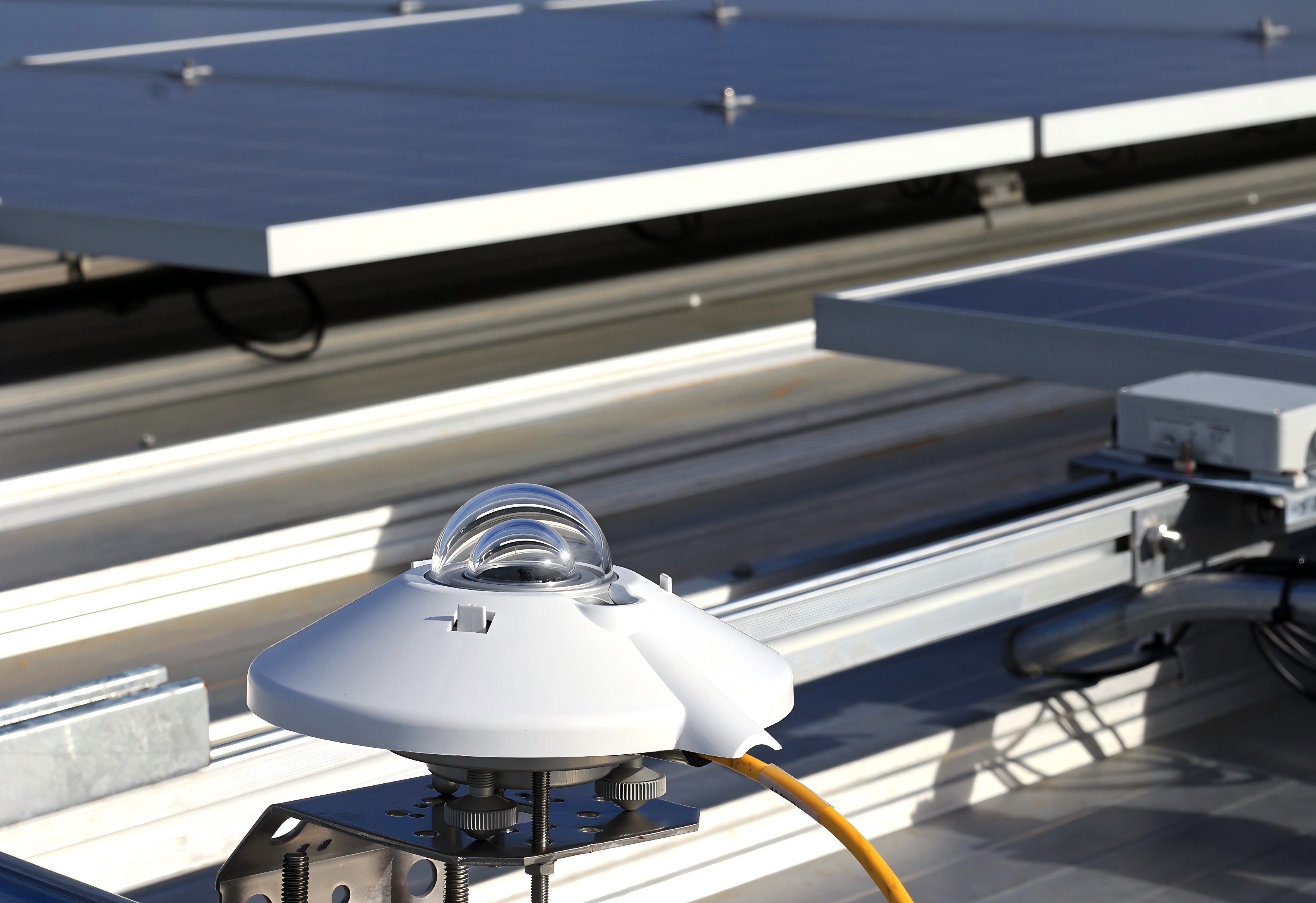
A solar weather station is an integrated environmental monitoring system specifically designed for photovoltaic power plants. It continuously measures key meteorological and operational parameters that affect solar energy generation.
Typical monitored parameters include:
Solar irradiance (GHI & POA)
Module temperature
Ambient temperature
Relative humidity
Wind speed and direction
Rainfall
Atmospheric pressure
These measurements allow operators to compare actual energy production with theoretical output and evaluate the true operational condition of the PV system.
The Performance Ratio (PR) is one of the most important indicators in the solar industry. It measures how efficiently a photovoltaic plant converts available sunlight into usable electrical energy.
PR helps eliminate the influence of changing weather conditions and provides a standardized method for evaluating system efficiency.
A high PR indicates:
Healthy PV modules
Proper inverter operation
Minimal energy losses
Effective maintenance management
A low PR may indicate:
Soiling accumulation
Sensor inaccuracies
Module degradation
Shading issues
Cooling problems
Electrical faults
Because PR calculations rely heavily on irradiance and temperature measurements, sensor accuracy becomes critically important.
The pyranometer is the core sensor of any solar monitoring system. It measures solar irradiance, which represents the available solar energy reaching the PV array.
High-precision pyranometers are essential for:
PR calculation
Energy yield analysis
Solar resource assessment
Fault detection
Tracker optimization
Modern pyranometers support:
Fast response time
High sensitivity
Excellent long-term stability
RS485 Modbus communication
IEC 61724 compliance
For large solar farms, even a small irradiance measurement error can create substantial financial losses over the project lifecycle.
Solar module efficiency decreases as temperature rises. This phenomenon is known as the negative temperature coefficient of photovoltaic cells.
A reliable PV temperature sensor helps operators:
Monitor module thermal behavior
Calculate temperature-corrected PR
Detect overheating issues
Improve energy forecasting
Identify abnormal string performance
CODA Sensors’ paste-type temperature sensors are designed for direct installation on the module backsheet, providing accurate real-time temperature compensation data.
Ambient environmental conditions strongly influence PV system behavior.
Monitoring ambient temperature and humidity helps:
Analyze thermal performance
Study seasonal efficiency variations
Evaluate condensation risks
Improve predictive maintenance models
Support advanced loss analysis
These sensors are particularly important in tropical, coastal, and desert environments.
Wind plays an important role in panel cooling and structural safety.
Wind monitoring supports:
Thermal cooling analysis
Tracker protection control
Structural load evaluation
Extreme weather alerts
In tracker-based solar farms, wind data is essential for safe automatic stow control.
Rainfall monitoring helps operators optimize panel cleaning schedules and evaluate natural cleaning effects.
By combining rainfall data with PR analysis, operators can:
Detect soiling losses
Reduce unnecessary cleaning
Improve O&M efficiency
Increase annual ROI
CODA Sensors provides a complete solar weather monitoring solution designed for utility-scale PV projects, EPC contractors, and renewable energy operators.
The integrated solution includes:
Pyranometers
Solar radiation sensors
PV module temperature sensors
Ambient temperature and humidity sensors
Wind speed and direction sensors
Rainfall sensors
Data loggers
RS485 Modbus communication
SCADA integration support
Recommended products include:
CDG Series Pyranometer
CDT-14A Paste Type Temperature Sensor
CDQ-T1C Solar Weather Station
Key features:
IEC 61724 compliant
High measurement accuracy
IP65 industrial protection
Easy installation
Long-term operational stability
Real-time cloud monitoring support
The system is suitable for:
Utility-scale solar farms
Rooftop PV systems
Agrivoltaic projects
Floating solar power stations
Desert solar installations
High-quality environmental data ensures accurate PR calculation and prevents false performance assessments.
Data-driven maintenance strategies help reduce unnecessary inspections and cleaning operations.
Continuous monitoring allows operators to identify:
Soiling accumulation
Hotspots
Sensor failures
Tracker abnormalities
Abnormal temperature behavior
before serious energy losses occur.
Real-time meteorological data improves short-term power forecasting and supports grid integration planning.
Professional monitoring systems help EPC contractors meet:
IEC 61724 standards
Investor reporting requirements
Performance guarantee obligations
Solar weather monitoring systems are widely used in:
Utility-scale photovoltaic power plants
Commercial rooftop solar projects
Smart energy systems
Solar-plus-storage projects
Agricultural solar farms
Floating solar systems
Desert PV installations
Research and testing laboratories
A solar weather station is a meteorological monitoring system designed specifically for photovoltaic power plants. It measures environmental parameters that affect solar power generation efficiency.
Performance Ratio (PR) evaluates the real operational efficiency of a PV system by comparing actual energy output with theoretical output.
Typical sensors include:
Pyranometers
Module temperature sensors
Ambient temperature and humidity sensors
Wind sensors
Rain gauges
For utility-scale solar projects, high-precision pyranometers compliant with IEC 61724 and ISO 9060 standards are recommended.
Yes. Real-time monitoring helps operators optimize cleaning schedules, detect faults earlier, and reduce unnecessary maintenance operations.
As solar power plants continue to grow in scale and complexity, accurate environmental monitoring has become essential for maximizing energy yield and operational efficiency.
A professional solar weather station provides the critical data needed for:
Accurate PR calculation
Predictive maintenance
Energy forecasting
Soiling management
Thermal analysis
Compliance reporting
For EPC contractors and solar asset owners, investing in high-precision monitoring technology is one of the most effective ways to improve plant reliability and maximize long-term ROI.
CODA Sensors offers reliable and customizable solar PV monitoring solutions for renewable energy projects worldwide. From pyranometers to integrated weather stations, CODA helps solar operators turn environmental data into higher performance and better profitability.
What are the uses of a rain gauge? Learn how rai
Learn how PAR sensors measure PPFD, optimize gro
Learn how soil EC sensors help optimize fertiliz
Contact: Molly
Phone: +86-17775769236
Tel: 86-0731-85117089
Email: molly@codasensor.com
Add: Building S5, Aux Square, Yuelu District, Changsha City, Hunan Province, China
We chat






 English


