Urban management has traditionally relied on periodic data collection, manual inspections, and reactive decision-making. However, as cities grow larger and more complex, these traditional approaches are no longer sufficient. Today, city administrators face increasing pressure to manage infrastructure, resources, and public services more efficiently while ensuring sustainability and quality of life.
This is where sensor technology is making a profound impact.
Sensors—connected through the Internet of Things (IoT)—are revolutionizing how cities operate. By continuously collecting real-time data from the urban environment, sensors enable city managers to move from reactive to proactive and even predictive governance.
From traffic systems and waste management to environmental monitoring and public safety, sensors are redefining urban management in ways that were unimaginable just a decade ago.
Urban sensors are devices deployed across city infrastructure to monitor physical, environmental, and operational conditions. These sensors collect data and transmit it to centralized or cloud-based platforms for analysis.
Common types of sensors used in urban management include:
Environmental sensors (air quality, temperature, humidity)
Traffic and transportation sensors
Smart energy meters
Water level and quality sensors
Surveillance and safety sensors
These devices are often installed on streetlights, buildings, roads, bridges, and public transport systems, forming a dense network of data collection points.
One of the most significant changes brought by sensors is the shift from reactive to proactive urban management.
Problems are identified after they occur
Decisions are based on historical or incomplete data
Response times are often slow
Continuous real-time monitoring
Early detection of issues
Faster and more precise responses
For example, instead of responding to a flooded street after complaints, water level sensors can alert authorities before flooding occurs, allowing preventive action.
This shift not only improves efficiency but also reduces costs and minimizes disruptions for citizens.
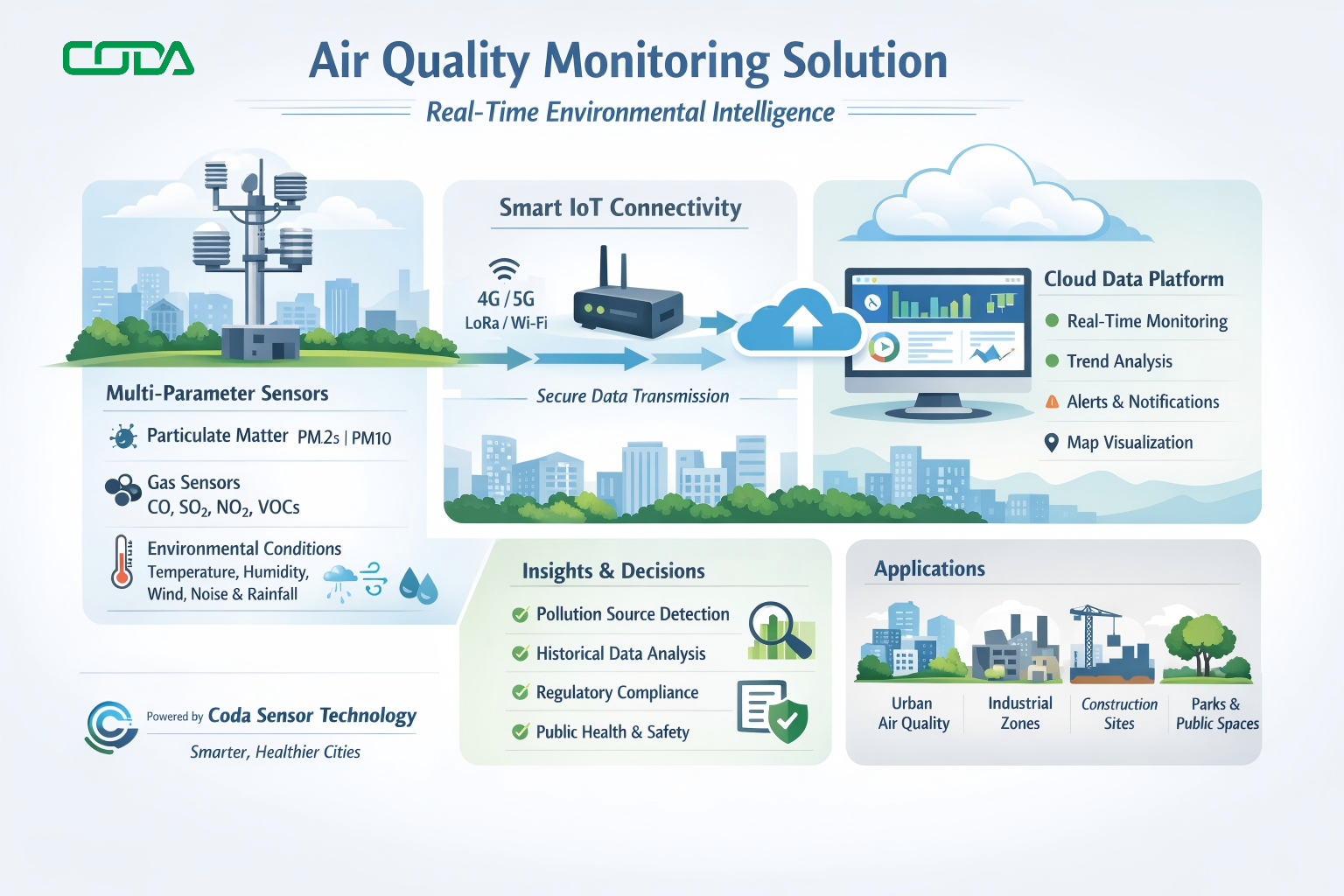
Traffic congestion is one of the most visible urban challenges. Sensors are playing a critical role in improving mobility by providing real-time traffic data.
Applications include:
Adaptive traffic signal control based on real-time flow
Smart parking systems that guide drivers to available spaces
Monitoring vehicle density and speed
Reducing congestion and travel time
With sensor data, cities can dynamically adjust traffic systems, improving efficiency and reducing emissions.
Waste collection has traditionally followed fixed schedules, often leading to inefficiencies such as overflowing bins or unnecessary pickups.
Sensors are changing this by:
Monitoring fill levels in waste bins
Optimizing collection routes
Reducing fuel consumption and operational costs
Preventing overflow and maintaining cleanliness
This data-driven approach ensures that waste management services are both efficient and environmentally friendly.
Energy consumption is a major concern for urban areas. Sensors enable smarter energy management by providing detailed insights into usage patterns.
Key benefits include:
Real-time monitoring of electricity consumption
Demand-response systems to balance energy loads
Integration with renewable energy sources
Reduction of energy waste
Smart grids powered by sensor data can automatically adjust supply and demand, improving reliability and sustainability.
Water is a critical resource, and its management is becoming increasingly complex due to climate change and urbanization.
Sensors help cities:
Monitor water distribution systems for leaks
Track water quality in real time
Measure rainfall and predict flooding
Manage reservoirs and drainage systems
By using sensor data, cities can ensure efficient water use and respond quickly to potential risks.
Environmental sustainability is a key priority for modern cities. Sensors provide the data needed to monitor and improve environmental conditions.
Applications include:
Air quality monitoring to reduce pollution
Noise level tracking for better urban planning
Urban heat island detection
Climate data collection for policy-making
This information enables cities to implement targeted measures that improve environmental quality and public health.
Sensors are enhancing public safety by enabling faster and more effective responses to emergencies.
Examples include:
Fire detection systems
Structural health monitoring of bridges and buildings
Surveillance systems with real-time alerts
Disaster detection and early warning systems
With real-time data, emergency services can respond more quickly and accurately, potentially saving lives.
At the heart of sensor-driven urban management is data.
Sensors generate massive amounts of data, which are analyzed using advanced technologies such as:
Cloud computing
Artificial intelligence (AI)
Machine learning
Big data analytics
This data-driven approach allows city managers to:
Identify patterns and trends
Predict future issues
Optimize resource allocation
Make evidence-based decisions
For example, predictive analytics can forecast traffic congestion or energy demand, enabling cities to take preventive measures.
Sensors do not operate in isolation—they are part of a larger smart city ecosystem.
A typical system includes:
Sensors collecting data
Communication networks transmitting data
Cloud platforms storing and processing data
Analytics tools generating insights
Control systems executing actions
This interconnected system allows for automation and real-time decision-making.
For instance, a smart lighting system can adjust brightness based on environmental conditions and human activity, reducing energy consumption while maintaining safety.
Despite the benefits, there are several challenges associated with deploying and managing sensor networks:
Initial investment in sensors and communication networks can be high.
Handling large volumes of data requires robust systems and expertise.
Integrating different sensor types and platforms can be complex.
Cybersecurity is a major concern, as sensor networks can be vulnerable to attacks.
Sensors require regular calibration and maintenance to ensure accuracy.
Addressing these challenges is essential for the successful implementation of sensor-driven urban management systems.
The role of sensors in urban management will continue to expand as technology advances.
Emerging trends include:
Edge computing for faster data processing
AI-driven automation and decision-making
Integration with autonomous vehicles
Expansion of 5G networks for faster connectivity
Development of low-cost, high-precision sensors
In the future, cities will become increasingly autonomous, with systems that can self-monitor, self-analyze, and self-optimize.
Sensors are fundamentally transforming urban management by providing real-time, actionable data. They enable cities to operate more efficiently, respond more quickly to challenges, and plan more effectively for the future.
From traffic management and waste collection to environmental monitoring and public safety, sensors are at the core of modern urban innovation.
As cities continue to grow and evolve, the importance of sensor technology will only increase. Those that embrace this transformation will be better equipped to create sustainable, resilient, and livable urban environments.
What are the uses of a rain gauge? Learn how rai
Learn how PAR sensors measure PPFD, optimize gro
Learn how soil EC sensors help optimize fertiliz
Contact: Molly
Phone: +86-17775769236
Tel: 86-0731-85117089
Email: molly@codasensor.com
Add: Building S5, Aux Square, Yuelu District, Changsha City, Hunan Province, China
We chat






 English


