Ultraviolet (UV) radiation is a critical yet often underestimated component of environmental monitoring systems. As climate patterns shift and environmental challenges intensify, accurate meteorological UV measurement has become increasingly important for climate research, atmospheric analysis, agriculture, and public health protection.
Modern environmental monitoring stations are no longer limited to measuring temperature, humidity, wind speed, and rainfall. Today, a weather station UV sensor plays a vital role in providing comprehensive atmospheric data. UV radiation monitoring enhances scientific understanding, supports safety initiatives, and improves predictive environmental models.
This article explores why UV data matters, how it supports research and public safety, and how UV sensors integrate seamlessly into automatic weather stations.
Ultraviolet radiation is part of the electromagnetic spectrum emitted by the sun. It is typically categorized into:
UV-A (315–400 nm) – Long-wave radiation that reaches the Earth’s surface.
UV-B (280–315 nm) – Medium-wave radiation, partially absorbed by the ozone layer.
UV-C (100–280 nm) – Mostly absorbed by the atmosphere and does not reach the surface.
While UV radiation is natural, its intensity fluctuates due to atmospheric conditions, ozone concentration, cloud cover, altitude, and pollution levels. These fluctuations directly impact ecosystems, human health, and material durability.
Accurate environmental UV monitoring systems are essential to track these variations and provide actionable data.
The ozone layer absorbs most harmful UV-B radiation. Changes in UV intensity often indicate variations in ozone concentration. By collecting long-term UV radiation data, researchers can:
Track ozone depletion and recovery trends
Study the effectiveness of international environmental agreements
Monitor atmospheric chemical interactions
Reliable meteorological UV measurement contributes directly to global climate databases and atmospheric models.
UV radiation interacts with atmospheric particles, greenhouse gases, and aerosols. Measuring UV levels helps scientists understand:
Cloud formation processes
Atmospheric scattering effects
Radiation balance within the Earth’s climate system
Comprehensive environmental monitoring that includes UV data improves climate simulations and predictive accuracy.
Climate and weather models rely on solar radiation data. While total solar radiation is often measured, UV-specific data provides deeper insight into:
Surface radiation distribution
Biological impact assessment
Ecosystem stress evaluation
Adding a weather station UV sensor strengthens environmental datasets and enhances research precision.
Beyond scientific research, UV monitoring has significant public health implications.
Excessive UV exposure increases risks of:
Skin cancer
Cataracts
Premature skin aging
Immune system suppression
Accurate UV radiation monitoring supports real-time UV index reporting, allowing authorities to issue public safety advisories.
Environmental monitoring stations installed in urban areas, coastal regions, and high-altitude zones help communities stay informed and protected.
Regions with high solar exposure require continuous UV monitoring. Integrating UV sensors into meteorological networks enables:
Public alert systems
Workplace safety regulation enforcement
Outdoor event risk assessment
In areas with extreme UV levels, real-time data can significantly reduce health risks.
UV radiation accelerates degradation of:
Plastics
Coatings
Solar panels
Construction materials
Environmental UV monitoring systems help industries evaluate material durability and implement preventive maintenance strategies.
UV radiation interacts with aerosols, pollutants, and atmospheric gases. By measuring UV intensity, researchers gain insight into:
Air pollution levels
Smog formation
Particulate matter effects
Radiative forcing
Combining UV data with air quality monitoring enhances understanding of atmospheric chemistry and environmental health.
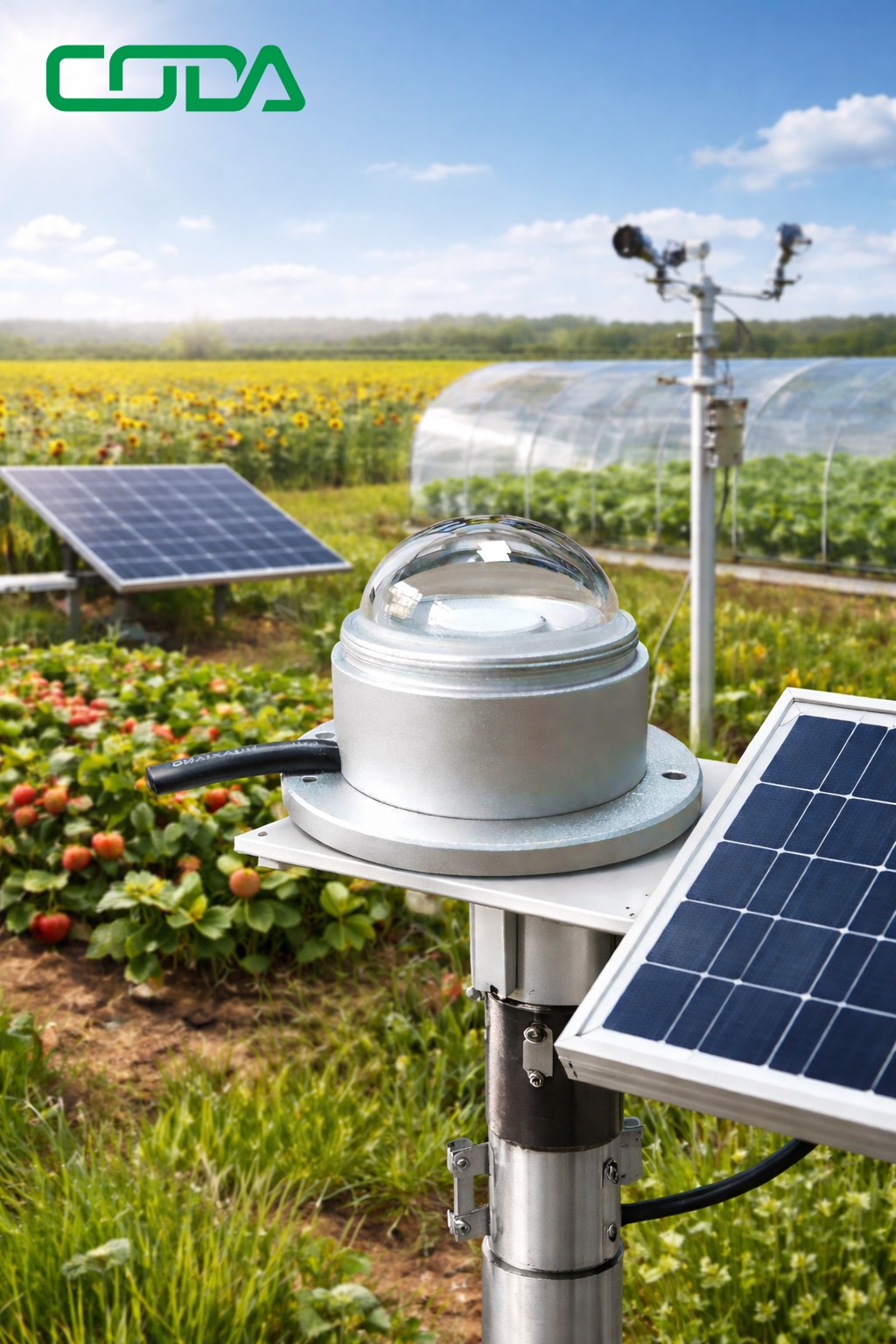
Modern automatic weather stations (AWS) are designed to collect multi-parameter environmental data. A UV radiation sensor integrates seamlessly into these systems.
UV sensors are typically mounted on:
Weather station cross arms
Radiation platforms
Dedicated solar measurement frames
They are installed in open, unobstructed locations to ensure accurate solar exposure measurement.
The sensor connects to:
Data loggers
Environmental controllers
Remote telemetry modules
This allows continuous data acquisition and transmission.
UV radiation data is:
Collected in real time
Logged at configurable intervals
Transmitted via RS485, Modbus, or wireless systems
Uploaded to cloud monitoring platforms
This integration enables centralized monitoring across multiple stations, making it ideal for large-scale environmental networks.
In an automatic weather station, UV data can be correlated with:
Solar radiation
Temperature
Humidity
Wind speed
Atmospheric pressure
This combined dataset provides a comprehensive environmental profile, essential for research and forecasting.
Government meteorological agencies use UV sensors to improve weather reporting accuracy and public health forecasting.
Academic institutions rely on long-term UV datasets for atmospheric and climate studies.
Urban environmental monitoring systems integrate UV data to support sustainability initiatives and public awareness programs.
Although primarily used for climate studies, UV monitoring also benefits agriculture by assessing crop exposure and stress levels.
Areas with stronger UV radiation require specialized monitoring to protect communities and ecosystems.
When selecting a UV radiation sensor for environmental monitoring, consider:
High sensitivity and stable output
Accurate spectral response
Weather-resistant housing
Long-term outdoor durability
Low maintenance requirements
Easy integration with data loggers
A robust outdoor UV sensor must withstand temperature fluctuations, humidity, dust, and prolonged sun exposure.
As environmental awareness increases, regulatory standards and research initiatives demand more precise data. UV radiation monitoring is becoming a standard parameter in advanced meteorological systems.
With climate change influencing atmospheric conditions and public health concerns rising, integrating a meteorological UV measurement system into environmental stations is no longer optional — it is essential.
Reliable UV data supports:
Climate science
Environmental protection
Public health safety
Infrastructure resilience
Sustainable development
Environmental monitoring stations play a fundamental role in understanding and protecting our planet. Among the many parameters measured, UV radiation stands out as a critical factor influencing climate systems, atmospheric chemistry, ecosystems, and human health.
By incorporating a high-quality weather station UV sensor into automatic weather stations, organizations can significantly enhance their environmental data accuracy and research capabilities.
As global environmental challenges grow more complex, comprehensive monitoring — including UV radiation — will remain indispensable for building safer, smarter, and more sustainable communities.
What are the uses of a rain gauge? Learn how rai
Learn how PAR sensors measure PPFD, optimize gro
Learn how soil EC sensors help optimize fertiliz
Contact: Molly
Phone: +86-17775769236
Tel: 86-0731-85117089
Email: molly@codasensor.com
Add: Building S5, Aux Square, Yuelu District, Changsha City, Hunan Province, China
We chat






 English


